


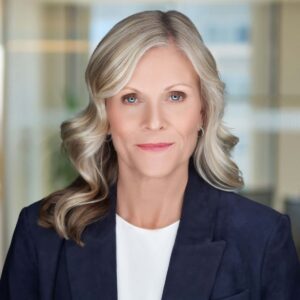
Maria Black’s leadership at ADP has achieved something rare in the enterprise tech world: near-perfect alignment between how employees rate their CEO and how they rate their workplace culture.
In Comparably’s 2025 rankings released this week, ADP claimed the number one CEO spot for the first time along with the number eight nod for culture—a consistency that often eludes even the most celebrated tech companies.
The rankings, based on anonymous feedback from 15 million employee ratings across 70,000 companies, reveal a surprising disconnect at many leading tech firms. Employees may love their CEO but feel disconnected from company culture, or thrive in the culture while rating leadership poorly. The gap raises questions about whether CEO popularity translates to tangible workplace improvements and what it takes to achieve both.
“Based on millions of anonymous employee ratings, the Comparably Awards provide authentic, unfiltered proof points that top candidates demand,” says Jon Bischke, GM of ZoomInfo Talent Solutions, of which Comparably is part.
“For winning organizations, this is a badge of honor and a powerful competitive advantage that directly influences their ability to attract and retain the best talent. Plus, candidates can trust that they’re based on real experiences, not marketing spin.”
Top 10 CEOs of 2025
The ninth annual list recognizes the highest-rated chief executives based solely on employee sentiment ratings provided over the past 12 months. Black leads a top 10 that includes a mix of enterprise tech leaders, healthcare executives and business services CEOs:
-
- Maria Black, President and CEO, ADP
- Kumsal Bayazit, CEO, Elsevier
- Shantanu Narayen, President and CEO, Adobe
- Elie Maalouf, CEO, The Breakers Palm Beach
- Vlad Shmunis, Founder and CEO, RingCentral
- Michael Weening, President and CEO, Calix
- Geoff Judge, CEO, Alkami Technology
- Peter Harrison, President, CRITICALRIVER INC.
- Mitch Stoller, Chairman and CEO, Golden Hippo
- Kurt Ekert, President and CEO, Sabre Corporation
The CEO-culture gap
While 2025 Top HR Product award winner ADP demonstrates strong alignment between leadership and culture, other tech giants show notable disconnects. Adobe CEO Shantanu Narayen ranks number three—one of the most beloved CEOs in tech—yet the company’s culture ranks 54th. The disparity suggests employees admire leadership from afar but perhaps don’t feel it in their daily work.
Google presents the inverse problem. The company ranks ninth for workplace culture, while CEO Sundar Pichai lands at number 46. The gap indicates that strong foundational culture and workplace practices can thrive even when CEO approval ratings remain middling.
These contrasts highlight different paths to workplace satisfaction. Adobe proves you can have a celebrated CEO without top-tier culture ratings, while Google shows that perks, benefits and people practices can drive culture independent of CEO popularity. ADP’s dual top-10 ranking suggests that a true competitive advantage comes from getting both right.
Other HR technology firms on the lists show varied results.
-
- 2025 HR Top Product award winner Paycom’s CEO Chad Richison ranks at number 71, while the company’s culture scores 29th, significantly outperforming the CEO rating.
- PlanSource shows an even larger gap, with CEO Dayne Williams at number 97 but culture ranking 17th.
- Healthcare workforce management firm symplr demonstrates consistency with CEO BJ Schaknowski at 85 and culture at 87.
ADP’s achievement of top ratings in both categories may signal a competitive advantage in an increasingly crowded HCM market where clients scrutinize vendors’ own workplace practices.
Maria Black’s leadership impact
Black’s ascent to the top CEO spot comes in her third year leading ADP, having succeeded Carlos Rodriguez as president and CEO on January 1, 2023. Rodriguez, who led ADP from November 2011 through the end of 2022, transitioned to the role of executive chair, while Black took the helm of the company’s 60,000-person workforce.
At the time of her appointment, Black emphasized her commitment to “fostering meaningful collaboration and empowering the great talent of our 60,000 associates, whose relentless focus on the success of our clients has reshaped HCM time and again by rethinking a better, more personalized world at work.”
Her philosophy appears to have translated into measurable employee satisfaction. The simultaneous culture ranking of eighth suggests Black’s leadership priorities cascade into actual workplace practices rather than remaining aspirational statements.
Before becoming CEO, Black started her ADP journey as a sales associate and has since served in several leadership roles, including president of sales and marketing and president of small business services. Her internal promotion represented continuity in ADP’s executive leadership while bringing a fresh perspective after Rodriguez’s 12-year tenure.
Black’s influence extends beyond ADP’s internal operations. HR Executive recognized her as one of the Top 100 HR Tech Influencers in both 2024 and 2025, highlighting her impact on the broader human capital management industry. The recognition places her among key voices shaping how organizations approach workforce technology and employee experience.
The CEO ranking also adds to ADP’s recent accolades. In January 2025, Fortune named ADP one of the World’s Most Admired Companies for the 19th consecutive year. The Fortune recognition, combined with the Comparably rankings, suggests sustained performance in both external reputation and internal employee satisfaction.
Methodology and rankings
The Comparably rankings derive from sentiment ratings provided by employees who anonymously rated their CEOs during a 12-month period from November 10, 2024, through November 10, 2025. Rankings were determined based on a series of questions about each CEO, with answers given numerical scores and compared to companies of similar size across North America.
To qualify, large companies with more than 500 employees needed at least 75 employee participants. Additional weight was given to companies with greater employee participation relative to company size for statistical significance. There were no fees or nomination requirements for inclusion.

