


The 2025 HR Tech conference in Las Vegas brought together thousands of HR leaders, technology providers and consultants to tackle a pressing question: How can organizations adapt their people strategies to keep pace with rapid changes in work, technology and employee expectations?
Throughout three days of keynotes, panels and personal discussions, one message was clear: To stay competitive, organizations need to take an intentional, strategic approach to how they use technology and data to support their workforce.
Five priority areas emerged as critical for HR teams to focus on in the year ahead. These imperatives offer practical guidance for HR leaders looking to modernize their practices and build more agile, resilient organizations.
1. Beyond digital ‘lipstick’: How to prioritize HR tech
According to many experts at HR Tech, HR leaders must avoid applying technology Band-Aids to broken processes, as AI will only serve to amplify insolvent practices and data. As Mercer’s Jason Averbook powerfully articulated, “Digital transformation is not about putting lipstick on a pig. It’s about fundamentally rethinking how we operate.” Organizations can no longer afford to overlay digital solutions on analog thinking and expect transformative results.

This shift demands a fundamental reset in how HR approaches change management, a topic that many speakers said should be a top priority for leaders. The traditional project-based transformation model, with its defined timelines and finite endpoints, must evolve into a continuous, perpetual-beta mindset.
HR at the helm
Many experts at the conference said that HR leaders can no longer afford to wait for IT departments to drive change. Instead, they must develop the agency and capability to lead timely transformations that keep pace with business needs.
The implications of how HR leaders position themselves in enterprise technology initiatives could be profound. Organizations that continue to automate broken processes or implement new systems without addressing underlying cultural and operational issues will find themselves with expensive digital solutions that deliver minimal value, according to on-stage messages throughout the conference. Several experts predicted that the organizations that will thrive are those willing to question fundamental assumptions about how work gets done and how technology can enable better outcomes.
Read more | AI in HR at IBM: Lessons learned, from the CHRO
2. Trust as the foundation
Trust has always been a cornerstone of effective HR operations, with payroll serving as one of the most critical functions for building or destroying trust. After all, above all else, most employees go to work to earn a paycheck. Pim Altena, a general manager at global employment firm Remote, emphasized this reality: “Trust in payroll is non-negotiable. One mistake can undo years of confidence.”
However, the importance of trust extends far beyond payroll accuracy. According to a report from Great Place To Work, a UKG company, high-trust workplaces deliver measurable and highly sought-after business outcomes. These include higher revenue per employee, increased organizational adaptability, enhanced innovation and greater discretionary impact from employees. As Sarah Hodges, chief marketing officer at UKG, noted, “Trust is the currency of high-performing organizations.”
After a week at the conference, it’s clear that technology must support this trust-building imperative through user-centric design and cultural alignment.
HR tech should ‘enhance culture’

IBM CHRO and opening keynoter Nickle LaMoreaux reminded attendees that “technology should enhance culture, not mask its flaws.” This means avoiding the temptation to automate broken processes and instead focusing on creating seamless experiences that reinforce organizational values and build employee confidence.
Research published earlier this year in the Journal of Management Studies found that when employees trust that systems will work as promised, they’re more likely to embrace new technologies, engage with development opportunities and contribute discretionary effort to organizational goals. Conversely, systems that fail employees in basic ways create skepticism that undermines even the most well-intentioned transformation efforts.
Read more: Is ‘positive disruption’ the key to navigating rapid change?
3. Human-centered AI adoption
Artificial intelligence dominated discussions, but the most compelling insights focused on the human-led footing needed to harness AI’s potential.
Nat Natarajan, chief operating officer at employment platform G-P, offered the audience a relatable perspective: “Think of AI as your intern—helpful, but needing guidance.” This analogy captures the reality that AI tools can process information and suggest solutions, but human judgment remains essential for conveying the enterprise context, rooting decisions in ethical foundations and driving strategic decision-making.
Robin Barbacane, chief talent development officer at Rackspace Technology, warned her audience against the pitfalls of unchecked AI implementation: “AI without human oversight is a recipe for risk.” Throughout the conference, other speakers echoed her concern that AI systems can amplify existing biases, make recommendations based on incomplete data or produce outcomes that seem logical algorithmically but fail in real-world applications.
Successful AI rollouts in practice
While some panelists referenced research on “failed” AI implementation, others pointed out the flip side—the most successful AI adoption strategies share several characteristics. Insights from several experts revealed that winning AI plans typically:
- Focus on building AI literacy across the organization rather than concentrating expertise in a small technical team;
- Start with low-risk applications and gradually expand to more critical functions as confidence and competence grow;
- Maintain continuous monitoring for bias, accuracy and unintended consequences; and
- Preserve human domain expertise as a competitive advantage.
While AI can identify patterns and process vast amounts of data, human experts remain essential for interpreting results, understanding context and making nuanced decisions that consider factors beyond what algorithms can capture.
Organizations are discovering that the key to AI success lies not in replacing human judgment, but in augmenting it, a concept that was a recurring theme throughout many of the sessions. HR leaders were advised to avoid FOMO-driven implementations and instead focus on solving specific problems where AI’s strengths align with genuine business needs.
Read more: What are the key findings of the 2025 Annual HR Systems Survey?
4. Skills as strategic currency
Organizations should think about growth and capability building, instead of focusing solely on headcount expansion, according to several speakers. Forward-thinking companies are prioritizing workforce productivity and skills development in a way that Kathi Enderes of The Josh Bersin Company applied a memorable shorthand: “Skills are the new currency of productivity.”
Many skills-based workforce transitions are driven by economic realities and shifting workforce dynamics, and several experts at HR Tech said they believe that advancements in AI could help address these challenges. With talent acquisition costs rising and skilled workers increasingly selective about opportunities, some experts advised that developing existing employees often delivers better returns than aggressive hiring strategies. In fact, research from McKinsey shows that employers lose, on average, more than $50,000 when replacing a full-time employee.

AI-powered learning systems are accelerating skills-based employee development by making personalized learning scalable across large organizations.
However, as HR Tech keynote speaker Josh Bersin explained, “Learning must solve problems, not just check boxes.” Today’s emerging HR technology enables new approaches, but success depends on connecting development directly to business outcomes and employee needs.
Driving outcomes with learning
Organizations are discovering that impressive learning technology means little if it doesn’t result in improved performance, increased engagement or enhanced capability to meet business challenges. In a conversation with HR Executive, Apratim Purakayastha, Skillsoft’s general manager of talent development solutions, reinforced this point: “AI-powered learning is only valuable when it drives outcomes.”
The implications extend to how organizations structure career development, according to several speakers. Traditional advancement models based on tenure and hierarchical progression are more frequently giving way to flexible pathways that emphasize skill acquisition, lateral movement and continuous adaptation to changing requirements.
As IBM’s LaMoreaux stated, “[HR leaders] must redesign entry-level roles to reflect the future of work.” She said this means creating roles that prepare employees for careers that will evolve continuously rather than follow predictable patterns.
Read more: Where Josh Bersin thinks AI transformation is really headed
5. Data, ecosystems and aligned vision
One strategic imperative addresses a challenge that has long frustrated HR leaders: the fragmentation of people data across multiple systems and the resulting inability to understand the complete employee experience.
Josh Gosliner, vice president of product strategy at SAP SuccessFactors, circled the essential problem: “Disconnected data leads to disconnected decisions.” He said organizations are making significant workforce investments based on incomplete information because their data exists in silos that don’t communicate with each other.
Sahana Mukherjee, a global HR leader at Citigroup, reinforced this point: “Integrated data is the foundation of strategic HR.” She said that without comprehensive visibility into the employee experience, organizations struggle to identify problems, measure progress or make informed decisions about their most significant investment: their people.
The challenge has tentacles that extend beyond technical integration into strategic alignment. Many organizations struggle with point solution proliferation, attempting to solve individual HR challenges with separate software tools without considering broader ecosystem implications.
Long-term solution or a quick fix?
In a briefing with HR Executive, Alan Segal, chief digital and technology officer at talent firm AMS, cautioned against prioritizing speed over strategic considerations: “Speed is important, but not at the cost of compliance.” He says organizations that rush to implement solutions without considering security, scalability or regulatory requirements often find that quick fixes become expensive problems.
Altena of Remote added another crucial consideration, describing how “hidden costs in tech can derail transformation.” The initial software investment represents only a fraction of the total cost of ownership, according to Altena. Integration, training, maintenance and eventual replacement costs often exceed original budgets and timelines. HR leaders must request visibility into these factors from vendors before implementing a new technology.
Citigroup’s Mukherjee said the most successful organizations approach HR technology as an ecosystem rather than a collection of individual tools. They prioritize integration capabilities, plan for long-term scalability and maintain governance frameworks that prevent technological fragmentation.
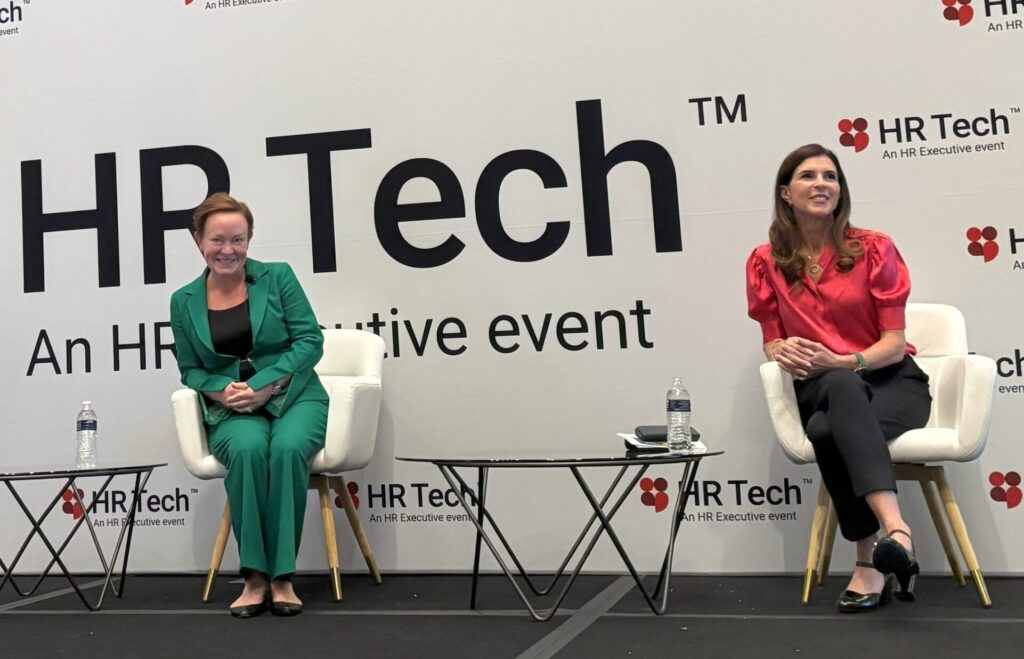
Perhaps most importantly, high-performing organizations lead with strategy rather than technology. Kelley Steven-Waiss, chief transformation officer at ServiceNow, observed that “culture shifts when employees see the benefit.”
Tech implementations succeed when they solve problems that employees experience, said Steven-Waiss, not when they showcase features that add complexity without value.
Industry analyst and founder of Valoir, Rebecca Wettemann, offered a crucial strategic insight that applies to many points made during the conference: “Strategy must lead, technology must follow.” The key takeaway is that organizations should start with clear objectives and work forward to identify appropriate technology solutions.

