

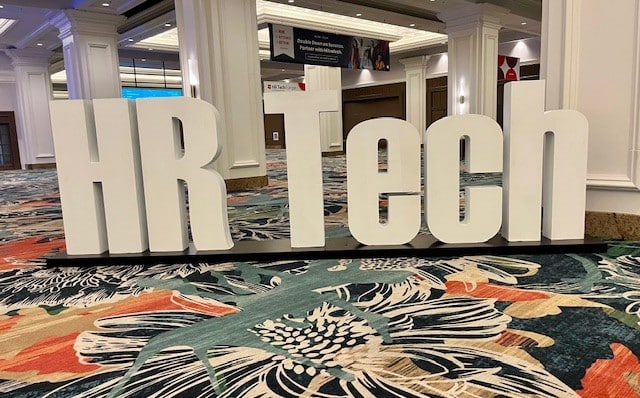
Many HR leaders are exploring workforce technology upgrades. In fact, one-quarter of HR teams plan to overhaul their tech infrastructure next year, according to Lattice’s 2026 State of People Strategy Report—a 10-point spike and one of the largest year-over-year increases the research has recorded.
The driving force, according to the study, is the growing pressure to build tech stacks that can evolve alongside artificial intelligence. As thousands of HR professionals head to the 2025 HR Tech conference in Las Vegas next week to evaluate new and trusted solutions, one industry expert warns against “chasing features instead of values.”
The HR Tech big picture

John Phillips, group vice president of employee workflows at ServiceNow, says the technology already exists to connect AI agents across traditionally fragmented HR systems. But, he adds, “the true unlock lies in organizational readiness, not the latest point solutions flooding vendor booths.”
Phillips sees AI agents as the most significant innovation trend to watch as attendees head into HR Tech 2025. “The growth of AI agents and their ability to simplify common tasks as an assistive part of people’s everyday lives should be top of mind for every HR leader,” he says.
However, he warns against viewing AI in isolation. “HR leaders must understand how these agents will work across the enterprise, because most employee interactions span multiple departments,” Phillips says.
While AI agents are grabbing headlines, Phillips says orchestration will soon emerge as the real game-changer. “Think of orchestration as the conductor in a symphony of AI agents, ensuring that each performs its task in harmony with the others,” he says.
The technology exists today to operate across traditionally independent workflows, from recruiting to performance management to employee support. But success, Phillips emphasizes, depends on preparation. “Leaders need to break down internal silos and rearchitect work to fully unlock AI’s potential,” he says.
Automation vs. orchestration
Distinguishing between automation and orchestration is critical for HR buyers when evaluating expo offerings and deciding what will deliver the most value to their organization. “Automation gets tasks done; orchestration gets outcomes delivered,” Phillips says.
While automation handles repetitive, rules-based tasks like sending welcome emails or routing inquiries, orchestration coordinates multiple AI agents across departments to achieve complex goals—such as managing entire onboarding processes, personalizing experiences by role and ensuring smooth offboarding.
Phillips identified one priority for reinvention: eliminating silos so HR doesn’t operate in a vacuum. Current workflows often force employees and managers to navigate disconnected systems across HR, finance, IT and legal departments. “It’s inefficient and, quite frankly, frustrating,” he says.
The solution, he adds, is connecting AI, data and workflows so that agents can operate seamlessly across organizational boundaries: “The companies that will win are those that break down silos and align AI with business outcomes.”
This transformation could unlock unprecedented productivity gains, but it requires leaders to rethink capacity planning, redesign roles and upskill employees for future growth.
Shifting vendor landscape
Phillips’ vision of cross-departmental orchestration reflects broader shifts happening in the HR technology sector. The traditional HR tech vendor map is changing, says Rebecca Wettemann, CEO of industry analyst firm Valoir. She says companies from outside the HR space are moving in, especially those pitching orchestration platforms that leverage data beyond HR systems.
Wettemann says the parallels between customer relationship management and HR service delivery are accelerating this convergence as companies invest in employee engagement strategies that mirror marketing approaches.

This convergence extends beyond technology integration to addressing holistic employee needs. She also urges HR professionals to track emerging wellness trends, particularly around financial health.
Her research highlights concerning statistics: Nearly 80% of employees are stressed about their finances, and the average employee spends 3.8 hours a week dealing with financial issues at work, according to Valoir’s report on employee financial health. “Financial stress affects the physical or mental health of nearly a third of employees,” says Wettemann.
Navigating the conference
Given these complex technological and wellness considerations, how should HR leaders approach the abundant array of options at the HR Tech conference? With hundreds of vendors competing for attention, Phillips recommends a focused approach to conference planning.
“Ask yourself: What business problems am I trying to solve, and what technology will help me get there?” he says. “If you can’t connect technology to business goals, you risk chasing features instead of values.”
Phillips offers these key questions for HR leaders to consider:
- Will this technology help employees thrive?
- How will adoption, growth and business outcomes be tracked?
- Does this solution break down silos—or create new ones?
Phillips advises leaders to build a plan for evaluating new tech options during the conference and stick to it, while leaving room to “get lost in the art of the possible.”
Related HR Tech sessions
Several conference sessions reflect these strategic priorities, aligning with the guidance shared by Phillips and Wettemann:
AI orchestration focus: IBM’s CHRO Nickle LaMoreaux opens the conference Tuesday with HR Agents: Myths, Mayhem and Monumental Moments.
Breaking down silos: Deloitte’s Boundaryless HR Experience sessions explore how to connect AI, data and workflows across departments.
Strategic tech planning: Industry analyst Josh Bersin’s Thursday keynote examines how AI is reshaping the HR technology market, providing context for 2026 planning.
Financial wellness: The breakout session Why SMBs Will Benefit Most from FinTech and HRTech Convergence examines how payroll companies are evolving into fintech leaders to meet workforce financial needs.
There is still time to register for HR Tech 2025. Get your ticket here.

